If you’re searching for a tiny house community near you, the good news is that options have expanded dramatically – there are now over 423 tiny house communities spread across all 50 U.S. states. Whether you’re ready to join a permanent village, park your tiny home on wheels at an RV park, or simply visit a resort-style development for weekends to test the lifestyle, the closest community may be closer than you think. This guide walks you through exactly how to find it, what to look for, and what to expect when you get there.
Use the location-finding resources and directories listed below to start narrowing down your search right now, and tap into broader tiny house tips, galleries, and community support to refine what kind of lifestyle and home you want.
Why Location Matters for Tiny House Living
Finding a tiny house community within driving distance isn’t just convenient – it’s central to whether tiny living actually works for your daily life. Proximity shapes everything: your commute, your social connections, your access to groceries and healthcare, and even your employment opportunities.
A community that’s a short walk from a town center offers a vastly different experience than one located deep in a rural area two hours from the nearest hospital. Residents in remote communities often face long drives, limited services, and isolation that can undermine the simplicity they were seeking in the first place. Meanwhile, communities near urban fringes or suburban corridors let you enjoy lower cost of living without sacrificing access to jobs and amenities.
The number of communities continues to grow. Directories like Little Houses For Sale now list over 423 communities, and Prefabricated.co tracks 278+ across 33 states. Tiny house communities in the US vary widely by location and features, which means your odds of finding one that fits your needs – and your geography – improve every year.
Key Factors That Define Quality Tiny House Communities
Not every tiny home community is created equal. The best ones combine legal stability, solid infrastructure, a good community culture, and smart placement near the things residents need. Here’s what separates a quality site from a risky one.
Legal compliance and zoning approvals provide long-term security. Tiny homes fall into different categories legally – those on wheels, foundation-placed, factory-built, or accessory dwelling units (ADUs). Local zoning ordinances set minimum square footage, foundation requirements, and whether RV-like structures can be used year-round. Zoning regulations can affect the placement of tiny homes in communities, so always clarify the legal standing of any community before you apply, and consult a tiny house building codes by state guide to understand how rules change across the country.
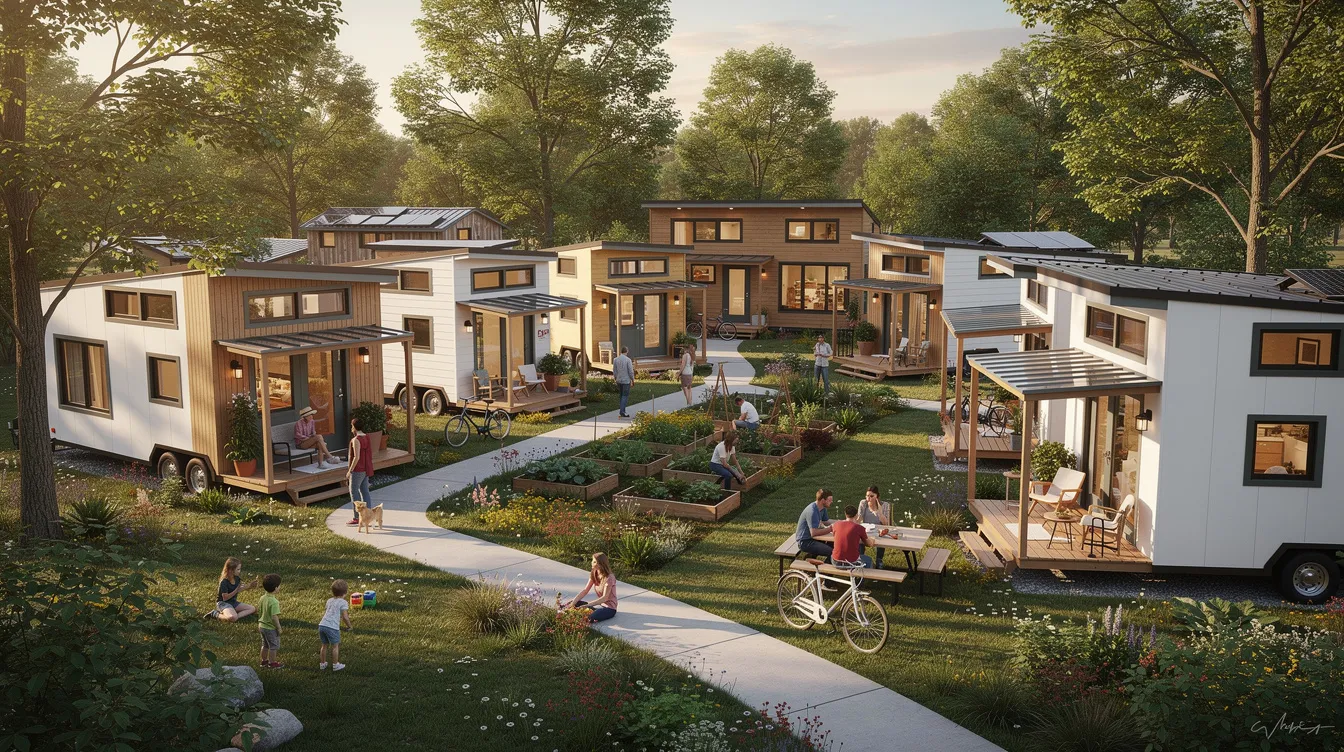
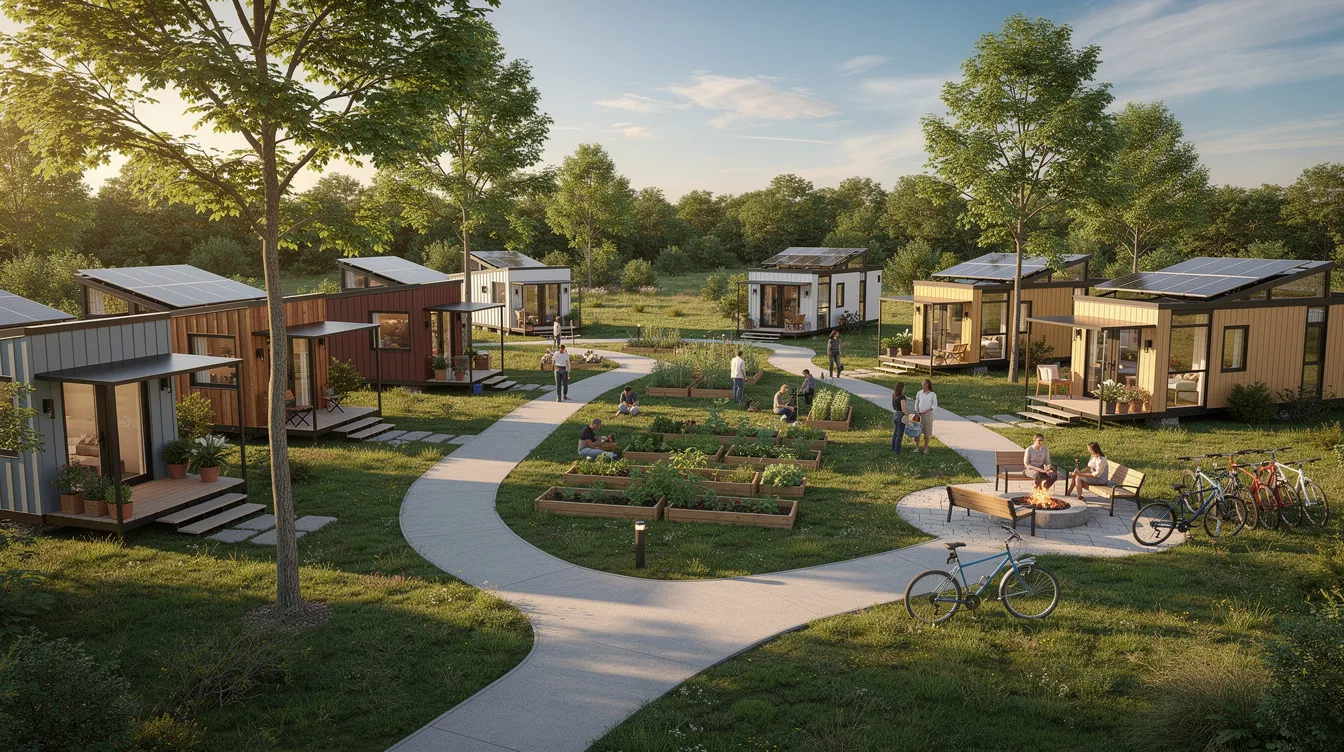
Essential amenities matter more than you’d expect in a small home. Quality communities typically provide water, sewer, electricity, and high-speed internet. Tiny house communities typically include shared infrastructure like community gardens and laundry facilities. Common amenities in modern tiny house communities may include dog parks and walking trails – features that effectively expand your living space beyond your four walls.
Community culture and shared values determine whether a place feels like home or just a parking lot. Many tiny house communities are designed to create a sense of community among residents, whether through shared meals, workshops, or collective land stewardship. Some tiny house communities focus on specific themes, such as agrihoods or nature retreats.
Proximity to employment centers and urban amenities makes or breaks the experience for most people. Communities in Texas and Florida, for example, often sit within commuting range of major metro areas, which is a large part of their appeal.
Types of Tiny House Communities Available
Not all communities serve the same purpose. Understanding the different models helps you find the right fit – whether you’re looking for a permanent place to build your life or a weekend escape near nature.
Permanent Residential Communities
These are designed for full-time tiny living. They typically offer lot leases or home ownership, often with foundation-based or hybrid builds. Escalante Village in Durango, Colorado features homes averaging 400 square feet on lots roughly 20×40 feet, with amenities like storage, trails, and gardens. Cedar Springs Tiny Village is Ohio’s first exclusive tiny living community. Cedar Springs charges $520 per month for lakefront sites and provides water, sewage, and power services. Cedar Springs also offers community garden access and has walking paths throughout the community, along with accepting all certified THOW builds. Tiny Homes Detroit aims to resolve low-income housing needs and serves formerly homeless individuals. Tiny Homes Detroit charges $1 per square foot for rent and offers a path to homeownership after seven years.
The target audience here is full-time residents who want stability, and often these communities maintain a wait list depending on availability.
RV Parks Accepting Tiny Houses
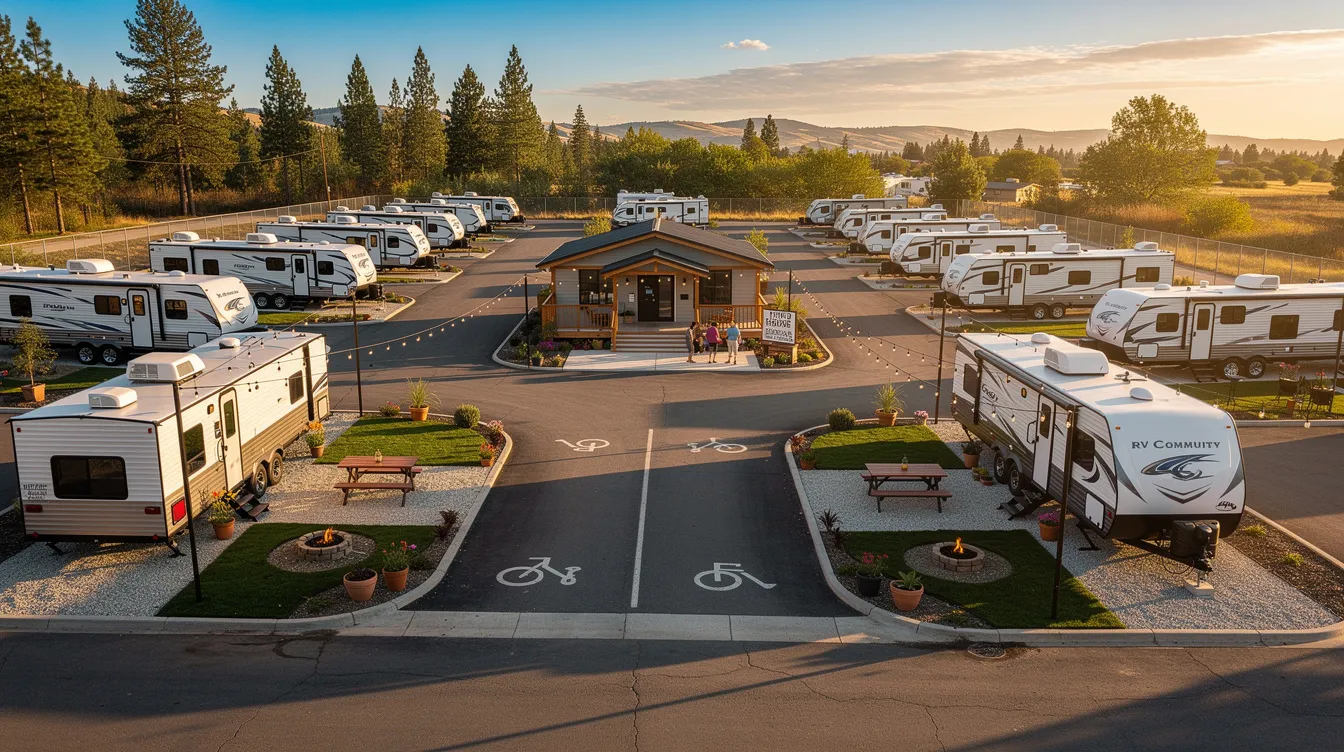
Traditional RV parks that welcome tiny houses – especially those on wheels – offer flexible monthly or seasonal rental options with lower upfront cost. Many require RVIA or NOAH certification for safety and regulatory compliance. Lot sizes for THOW sites often range from 1,500 to 2,500 square feet, and monthly rates can start from around $200 depending on the park and region. Nationwide, there are over 250 participating locations. Lake Dallas, for instance, only leases lots; no rental tiny homes are available, so you’ll need to bring your own.
Advantages include flexibility and wider availability. Downsides can include limited permanence and restrictions on modifications, or being treated like trailers rather than homes, so it’s worth looking at top tiny house designs that redefine small living to decide whether a more mobile or more permanent model fits you best.
Vacation and Short-Term Communities
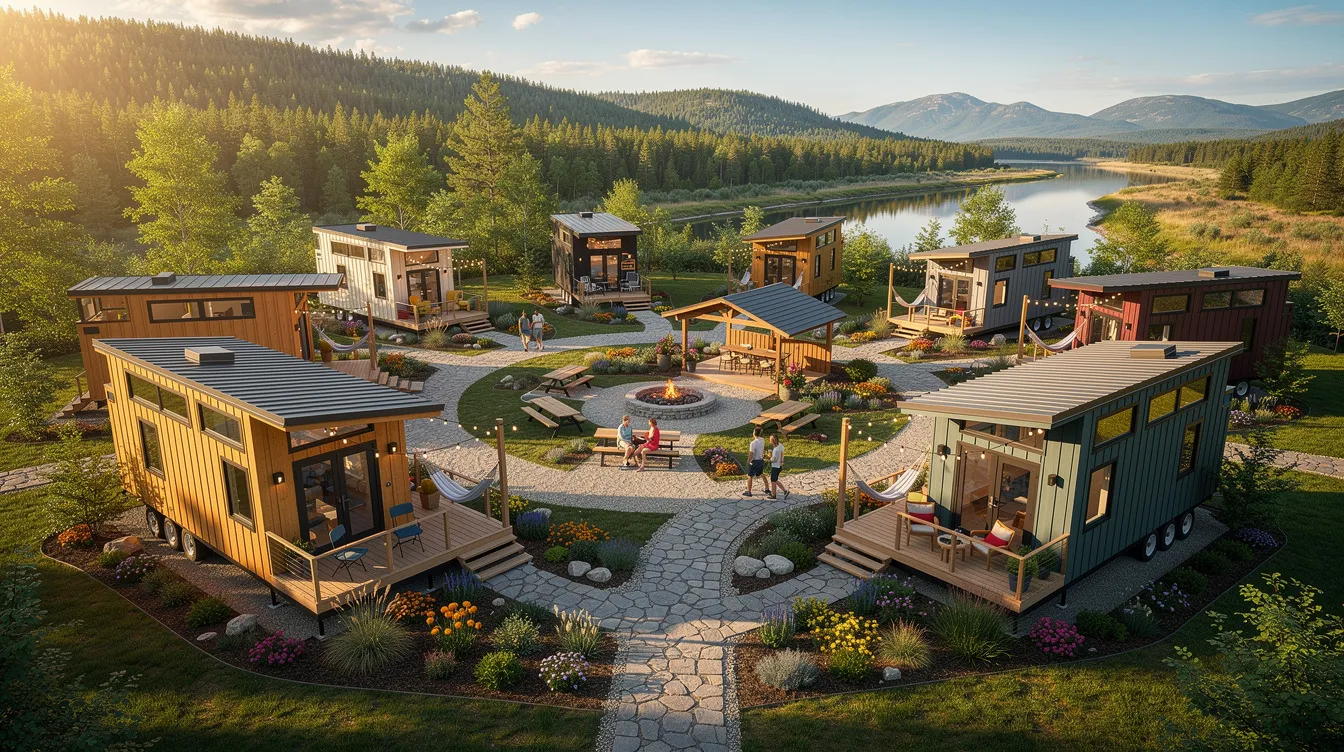
Resort-style tiny house villages let you try tiny living without a long-term commitment. WeeCasa Tiny House Resort is located 45 miles from Denver, Colorado and offers short-stay experiences in a variety of tiny home styles. Tiny Tranquility launched in 2018 on the Oregon coast. Tiny Tranquility offers short-term rentals for tiny houses, features a dog park and hiking trails, and offers easy access to outdoor attractions. These communities are good for testing the lifestyle before you commit to a permanent place.
How to Find Your Closest Tiny House Community
Here’s a systematic, step-by-step approach to locating nearby options – starting online and expanding outward.
Step 1: Search Online Databases and Resources
Use specialized directories to find communities by state, region, or proximity:
- Little Houses For Sale: 423+ communities across the U.S., searchable by state, with lot rent ranges of $300–$1,200 per month.
- Prefabricated.co: 278+ tiny home communities in 33 states, with interactive maps.
- Tiny Home Builders: ~115 communities including build-on-site, RV park, lot rentals, and gated villages.
- Mr Local Services Directory: State-by-state listings with lot size, ownership vs. lease details, utility info, and pet policies.
Check state and regional tiny house organizations for local listings. Many communities also post updates on Facebook, so searching for groups in your area can surface options that haven’t made it into national directories yet.
Step 2: Contact RV Parks in Your Area
Don’t overlook your local RV park. Call and ask specifically whether they accept tiny houses, especially THOWs. Key questions to ask:
- Do you require RVIA or NOAH certification?
- What are your size restrictions (max width, length, roof height)?
- Are full utility hookups (water, sewer, electric) available at each site?
- What are your monthly vs. seasonal rates?
- Are pets allowed?
This step often uncovers options that don’t appear in any online directory.
Step 3: Explore Alternative Housing Options
If no established community exists nearby, consider alternatives, including sourcing wholesale tiny homes for community or rental projects:
- Backyard rental / ADU placement: Some homeowners rent ground or yard space for tiny home placement in areas where ADU laws apply. Use personal networks or local classifieds.
- Buying land: Check local zoning for minimum house size requirements, foundation mandates, water/septic availability, and tax implications. Many counties don’t allow non-permanent dwellings, so do your research before you buy property, including whether it’s a good location to build and place a tiny house.
Success Stories from Community Residents
Real examples help clarify what finding and joining a tiny house community actually looks like.
Denetra in North Carolina lives in a THOW-friendly RV park in Western NC with lot rent around $650 per month. Her community offers gardens and shared workshops, and she enjoys a manageable commute into Asheville for work. The park’s nature trails and lake access made the location feel like more than just a parking spot.
Jacob and Michael at Crosswinds Tiny House Community in Texas chose a more remote development with a strong arts-focused culture. Their lot cost runs about $800 per month, and while summer heat drives utility costs higher, the community’s shared creative spaces and events made it worth the trade-off.
Alan in the Colorado mountains purchased land near Fairplay, where infrastructure like sewer, water, and road access had to be built from the ground up. The property cost was high, but the Gemenskäp community nearby – a gated 60-lot development with homes ranging from $100,000 to $450,000 – demonstrated that the lifestyle payoff in views and outdoor access can justify the investment.
Circle Pond, listed as a Top 10 Tiny House Community in the U.S., has 12 tiny house spaces available for rent. Circle Pond community spans nearly five acres, offering an intimate village feel. Meanwhile, Quixote Village in Olympia, Washington – 30 tiny homes for single homeless adults – shows how the model serves social purpose beyond lifestyle choice.
Popular Regions for Tiny House Communities
Some states and regions have a significantly higher concentration of communities, making them easier places to find your fit:
- Florida: ~22 listings in the Prefabricated.co directory – the most of any state.
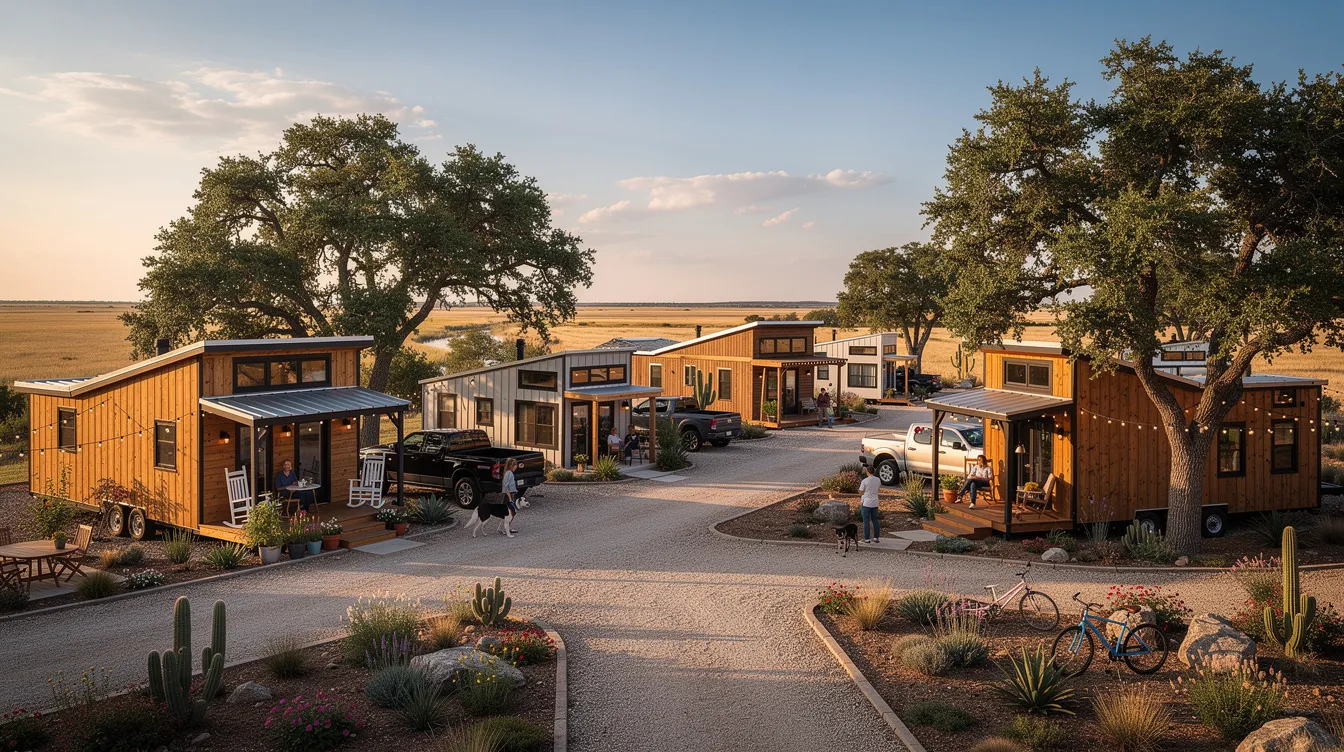
- Texas: ~20 listings, including privately owned developments and communities near Dallas, Austin, and San Antonio.
- Colorado: ~16 listings, including mountain communities like Gemenskäp in Fairplay and Escalante Village in Durango.
- Virginia, North Carolina, Georgia, Washington: Each with 10–13 listings.
Regionally:
- The South (TX, FL, GA, NC): Affordable land, mild winter weather, and some of the most favorable recent zoning changes. Many tiny house communities offer opportunities for both renting and ownership in these states, and if you’re considering the Lone Star State specifically, exploring tiny homes and communities in Texas can highlight what that market looks like.
- Mountain West (CO, OR, WA): Scenic appeal, outdoor recreation, and eco-conscious culture. Cloudland community in this region considers paved pathways for accessibility, reflecting the expanded focus on inclusive design, and those drawn to the Rockies can explore tiny house communities in Colorado for mountain-focused living options.
- Midwest (OH, WI, IL): Lower cost of land and proximity to urban centers. Cedar Springs in Ohio is a prime example.
- East Coast (NC, VA): Mixed rural and urban options with lower land cost than the Northeast, while states farther north like Massachusetts are also seeing growth in tiny house communities and villages despite higher land prices.
Tiny house living emphasizes simplicity and sustainable lifestyles, and these regions each offer a distinct version of that vision, fitting into the broader tiny houses movement and community-focused living.
Frequently Asked Questions
How far should I be willing to travel to find a community?
For commuters, ideally less than 30–60 minutes to a major employment center. If you work remotely or prioritize solitude, you may be comfortable with longer distances – but consider how far you’ll need to drive for essentials like groceries, healthcare, and reliable internet. The balance between community quality and proximity to your current life is personal, but don’t underestimate how much a long drive erodes the simplicity you’re seeking.
What are typical monthly costs for tiny house community living?
Lot rent in most established communities ranges from $300 to $700 per month. Cedar Springs charges $520 per month for lakefront sites. Circle Pond offers 12 tiny house spaces for monthly rent. Utilities may be extra, and internet can run $50–$100 per month depending on whether you’re in a rural or urban location. If purchasing a home in a permanent village, expect costs of $100,000–$450,000 for foundation-based builds with shared land and amenities. Tiny Homes Detroit charges $1 per square foot for rent, showing just how wide the range can be depending on the community’s focus and mission.
Do I need special certifications for my tiny house to join a community?
Many RV park–type communities require RVIA or NOAH certification for tiny houses on wheels. Foundation-based homes typically need to comply with local building codes, and in many places, IRC Appendix Q defines a tiny house as a dwelling unit up to 400 square feet excluding lofts. Certification matters for insurance, safety, and regulatory compliance – contact any community directly to clarify their specific requirements before you visit or apply.
Start Your Search Today
The tiny house community landscape has expanded far beyond a handful of experimental villages. With over 423 communities now listed across the country – and new ones opening each year – the closest tiny home community to you may be just a short drive away. Whether you’re ready to join a permanent residential village, park at an RV park for a season, or simply visit a short-term community to learn what tiny living feels like on the ground, the resources and steps above give you everything you need to find your place.
Start with the online directories listed in this guide, contact communities directly to check availability, and don’t overlook local options that may not appear in any national listing. The right community – at the right distance – exists for nearly every aspiring tiny house resident.